You Won’t Believe What I Found in Okinawa’s Hidden Wild Places
Have you ever wandered somewhere so untouched it felt like the world was holding its breath? That’s Okinawa’s protected areas for you. Far from the crowded beaches, these quiet zones pulse with culture and nature intertwined. I was stunned by how much life thrives where tradition protects the land. This isn’t just scenery—it’s a living heritage. Let me take you where few tourists go, where every trail tells a story older than memory.
Discovering Okinawa Beyond the Postcard
Okinawa is often celebrated for its turquoise waters, white-sand beaches, and resort-lined coasts. Yet beneath this postcard-perfect surface lies a deeper, quieter truth—one of ancient forests, sacred groves, and marine sanctuaries preserved by generations who understand that harmony with nature is not a luxury, but a necessity. While millions visit each year drawn by sun and sea, a growing number are beginning to explore the island chain’s protected regions, where conservation and culture walk hand in hand.
The contrast between popular destinations and Okinawa’s wilder side could not be starker. In Naha and the main island’s southern resorts, shopping malls and tourist restaurants dominate. But travel north into the Yanbaru region, or west to the remote Kerama Islands, or further south to Iriomote, and the rhythm of life changes. Here, roads narrow, voices soften, and the sounds of cicadas and distant waves replace the hum of traffic. These are not just scenic escapes—they are ecological strongholds where biodiversity flourishes under careful stewardship.
Three core protected areas define Okinawa’s environmental legacy: the Yanbaru forests in northern Okinawa Island, the jungle-covered Iriomote Island, and the coral-rich Kerama archipelago. Each has earned recognition for its ecological significance. Yanbaru, for instance, was designated a UNESCO World Natural Heritage site in 2021, not only for its rare species but also for its cultural value. Iriomote is home to one of Japan’s last true wildernesses, while the Keramas host some of the clearest waters in the country, serving as vital nurseries for marine life.
What makes these regions exceptional is not just their natural beauty, but the way local values shape conservation. In Okinawan tradition, nature is not separate from daily life. Sacred groves known as *utaki* are still maintained by village elders, and many conservation efforts stem from long-held beliefs rather than modern policy alone. This deep-rooted respect ensures that protection is not imposed from the outside, but grown from within.
The Soul of Preservation: Why These Areas Matter
Okinawa’s subtropical climate creates a unique ecological crossroads where species from the tropics and temperate zones converge. This blend fosters extraordinary biodiversity, especially in isolated pockets where evolution has taken its own course. The islands host over 1,300 plant species, nearly half of which are found nowhere else on Earth. But it’s the animals—rare, elusive, and quietly resilient—that truly capture the soul of these protected lands.
Among the most iconic is the Okinawa rail, a flightless bird known locally as *yambaru kuina*. With its dark plumage and bright red bill, it moves silently through the undergrowth of northern Okinawa’s forests. Critically endangered and found only in Yanbaru, this bird is a symbol of both fragility and endurance. Similarly, the Iriomote cat—a small, wild feline with rounded ears and a long tail—exists nowhere else in the world. Fewer than 100 individuals remain, making every sighting a quiet miracle.
The survival of these species is no accident. It is the result of decades of conservation work backed by national and international recognition. Japan’s Ministry of the Environment classifies these regions as Wildlife Protection Areas, restricting development and regulating access. UNESCO’s designation of Yanbaru as a World Heritage site has further strengthened protections, drawing global attention to the importance of preserving these ecosystems. These designations are not just symbolic—they come with funding, monitoring, and legal frameworks that help keep roads from cutting through forests and resorts from crowding coastlines.
Yet environmental health in Okinawa is inseparable from cultural identity. For the Ryukyuan people, ancestors of modern Okinawans, nature was imbued with spiritual presence. Mountains, trees, and springs were not resources to exploit, but beings to honor. This worldview continues to influence how locals interact with the land. Conservation, in this context, is not about saving nature from people, but about sustaining a relationship that has endured for centuries. When a forest is protected, it’s not just for the birds and plants—it’s for the stories, rituals, and sense of belonging that grow alongside them.
Walking the Ancient Forests: A Journey Through Yambaru
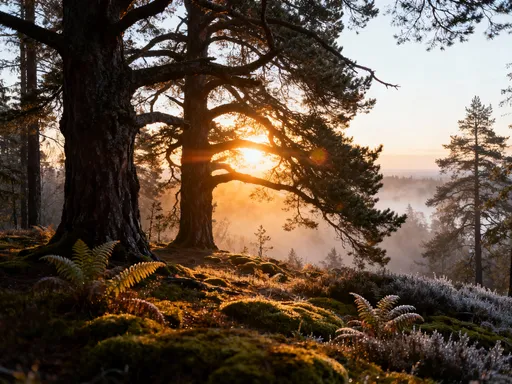
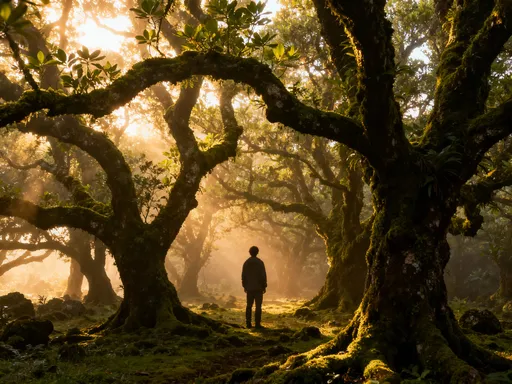
Stepping into the Yanbaru forest is like entering another world—one where time slows and the air hums with unseen life. Towering *gajumaru* trees, their roots twisting like ancient serpents, rise above a carpet of moss and ferns. Sunlight filters through the canopy in golden shafts, illuminating insects, lichens, and the occasional rustle of movement in the underbrush. The silence is deep, but not empty. It is filled with the chirps of the Yanbaru cricket, the distant call of the Okinawa rail, and the soft creak of branches swaying in the breeze.
During a morning hike along the Yanbaru Kokusen Nature Trail, I walked in near solitude. The path was well-marked but rarely crowded, winding through primary forest where few human footprints remain. My guide, a local naturalist named Hiroshi, pointed out signs of wildlife—a claw mark on bark, a patch of disturbed soil where a wild boar had foraged. He spoke softly, not just to avoid disturbing animals, but out of respect for the forest itself. “This place is not ours,” he said. “We are guests.”
What struck me most was the spiritual atmosphere. Scattered throughout the forest are small shrines and sacred groves, marked by shimenawa ropes—straw cords that signify a space set apart for the divine. These *utaki* are not tourist attractions; they are active places of reverence, often maintained by village priestesses. One such grove, deep in the woods, held a simple altar with offerings of salt, water, and seashells. No signs explained its purpose. Its power came from its silence, its age, its presence.
Forest conservation in Yanbaru is not just about protecting species—it’s about preserving a way of life. Traditional practices like sustainable forestry, herbal medicine, and seasonal rituals are still passed down through families. Young people are being encouraged to become forest guides, blending ecological knowledge with cultural storytelling. When a tree is cut, it is done with prayer. When a path is built, it follows ancient routes. The forest is not a museum; it is a living, breathing part of the community, and its protection ensures that both nature and culture continue to thrive.
Iriomote: Where Jungle Meets Tradition
If Yanbaru feels ancient, Iriomote feels primordial. Located at the southernmost edge of the Okinawan archipelago, this island is covered in dense subtropical jungle, crisscrossed by rivers and mangrove swamps. There are no large towns, few paved roads, and only a handful of accommodations. Most visitors arrive by ferry from Ishigaki, stepping onto a landscape that seems untouched by modernity. The air is thick with humidity, the nights alive with the calls of frogs and owls, and the sense of isolation is profound—yet never lonely.
The Iriomote cat is the island’s most famous resident, a creature so rare that many locals have never seen one. It is nocturnal, shy, and fiercely territorial, moving through the forest like a shadow. Scientists estimate fewer than 100 remain, threatened by habitat loss and vehicle collisions on the island’s few roads. Conservation efforts include wildlife corridors, speed limits, and motion-sensor cameras that help track movement without disturbance. The cat has become a symbol of coexistence—proof that even in a changing world, wildness can persist when people choose to make space for it.
Life on Iriomote moves at the pace of nature. Villages like Uehara rely on fishing, small-scale farming, and eco-tourism. Many families have lived here for generations, their homes built on stilts to withstand typhoons, their diets rich with seafood and locally grown vegetables. Respect for the land is woven into daily life. Fishing is done sustainably, often using traditional methods passed down for decades. Seasonal festivals honor the sea and forest, with dances and offerings that connect the present to the past.
Community-led eco-tourism is helping to sustain both culture and conservation. Locals offer guided night walks, river kayaking, and cultural experiences that allow visitors to learn without disrupting. These initiatives are not just about income—they are about pride. Residents want the world to see Iriomote not as a remote backwater, but as a place where people and nature live in balance. By welcoming guests in a responsible way, they ensure that tourism supports, rather than threatens, their way of life.
The Kerama Islands: Blue Sanctuaries with Deep Roots
While the northern and southern islands guard Okinawa’s forests, the Kerama archipelago protects its seas. Located about 40 kilometers west of Naha, these small islands are surrounded by some of the clearest waters in Japan. In 2014, the area was designated Kerama Islands National Park, establishing marine protected zones that limit fishing, anchor damage, and pollution. The result is a thriving underwater world where coral reefs pulse with color and fish dart through sunlit waters.
Snorkeling in the Keramas is an experience that defies expectation. Visibility often exceeds 30 meters, allowing swimmers to see entire reef systems stretching into the blue. Soft corals wave like ribbons, sea turtles glide past with quiet grace, and schools of tropical fish—blue tangs, parrotfish, and clownfish—move in synchronized waves. In winter, humpback whales migrate through these waters, their songs echoing in the deep. Whale watching tours operate under strict guidelines to avoid disturbing them, ensuring that awe does not turn into intrusion.
The connection between sea and culture here is profound. For centuries, Kerama fishermen have relied on sustainable practices, rotating fishing grounds and respecting seasonal bans. These traditions were not born of environmental policy, but of necessity—overfishing meant hunger. Today, this wisdom is being revived through community cooperatives that manage marine resources collectively. Fishing is not abandoned; it is honored and adapted.
Festivals on the islands reflect this reverence. The spring *Haru no Kai* festival, for example, includes boat processions and offerings to the sea gods, thanking them for abundance and safety. Children dance in traditional costumes, elders lead prayers, and the entire community gathers on the shore. These events are not performances for tourists—they are acts of continuity, linking past and present through ritual and gratitude. When visitors attend, they are reminded that conservation is not just science; it is also story, memory, and faith.
How to Visit Right: A Traveler’s Responsibility
Exploring Okinawa’s protected areas is a privilege, not a right. These places are fragile, shaped by centuries of care, and vulnerable to the pressures of modern tourism. The way we travel matters—not just for the environment, but for the people who call these islands home. Responsible travel is not about sacrifice; it is about intention. It means choosing experiences that honor rather than exploit, that listen rather than dominate.
One of the most effective ways to minimize impact is to travel with local guides. They know the trails, the tides, and the traditions. They can point out a rare bird, explain a sacred site, or warn you before you step on coral. More importantly, they ensure that tourism dollars stay in the community. Whether it’s a forest walk in Yanbaru, a night hike on Iriomote, or a snorkeling tour in the Keramas, guided experiences provide deeper understanding and reduce the risk of unintentional harm.
Staying on marked paths is another essential practice. In delicate ecosystems, a single footstep off-trail can damage rare plants or disturb animal nests. In Yanbaru, for example, boardwalks and ropes guide visitors safely through the forest. In the Keramas, snorkelers are asked to avoid touching coral or feeding fish. These rules are not arbitrary—they are based on years of observation and research. Following them shows respect not just for nature, but for the people who protect it.
Choosing eco-certified accommodations and tours makes a tangible difference. Look for lodgings that use solar power, recycle waste, and source food locally. Support operators who limit group sizes, avoid single-use plastics, and contribute to conservation funds. Many guesthouses on Iriomote and in the Keramas are small, family-run establishments that prioritize sustainability over profit. By staying with them, you help keep tourism community-based and low-impact.
Equally important is cultural respect. Sacred spaces like *utaki* groves or coastal shrines are not photo opportunities—they are active places of worship. Visitors should never enter restricted areas, touch ritual objects, or speak loudly near them. Learning a few phrases in the local dialect, bowing when greeting elders, and dressing modestly in villages go a long way in building trust. When we honor culture, we become guests, not intruders.
Low-impact travel does not dull the experience—it deepens it. There is more wonder in watching a wild cat from a distance than chasing it for a photo. There is more meaning in listening to a fisherman’s story than in buying a souvenir made from coral. When we slow down, we see more. When we respect, we connect. And when we connect, we change.
Bringing It All Home: Why This Journey Changes You
Traveling through Okinawa’s hidden wild places does more than fill a camera roll—it shifts something inside. In the silence of Yanbaru’s forest, the stillness of Iriomote’s nights, the clarity of the Kerama seas, a different rhythm emerges. It is the rhythm of patience, of presence, of belonging. These places do not shout for attention. They whisper. And in that whisper, we hear a truth often drowned out by modern life: that we are not separate from nature, but part of it.
The deeper lesson is not just about conservation, but about relationship. In Okinawa, nature is not a resource to extract, but a relative to respect. The forest, the sea, the animals—they are not just “out there.” They are woven into identity, memory, and daily practice. This understanding transforms how we see our own homes. It invites us to ask: What sacred groves exist in our neighborhoods? What traditions honor the earth? How can we live with more care, more gratitude?
For many travelers, especially women in their 30s to 50s who carry the weight of family, work, and responsibility, these quiet journeys offer something rare: renewal. Not through luxury or escape, but through reconnection. Walking a forest trail, watching a turtle glide beneath the surface, listening to an elder’s story—these moments restore a sense of balance. They remind us that strength is not in control, but in harmony.
Seeking meaning over checklists changes how we travel. Instead of racing to see everything, we learn to see deeply. Instead of collecting souvenirs, we gather insights. The most powerful souvenirs from Okinawa are not physical—they are the memory of a bird’s call at dawn, the feel of cool moss underfoot, the quiet pride of having left no trace.
Okinawa’s wild heart beats strongest where we listen instead of take. It lives in the rustle of leaves, the song of the sea, the footsteps of those who walk with care. To visit these places is not to conquer, but to receive. And in receiving, we are changed—not just as travelers, but as human beings. The world needs more of this quiet wisdom. Perhaps, by carrying it home, we can help it grow.