Hidden Canvases: The Secret Art Worlds of Nuwara Eliya
Nestled in Sri Lanka’s misty highlands, Nuwara Eliya is more than just tea and colonial charm. Beyond the tourist trails, tucked inside old bungalows and mountain-facing studios, lie hidden art spaces that whisper creativity. I stumbled upon these quiet sanctuaries where brushstrokes meet breeze and local talent thrives unseen. This is not your typical gallery tour — it’s a journey into soulful expression, where nature and art become one. In a town celebrated for its rolling plantations and Victorian echoes, a quieter revolution unfolds — one painted in watercolor hues, carved in wood, and stitched into fabric. These are places where the air hums with introspection, where inspiration flows as freely as the mountain streams, and where travelers willing to look beyond the postcard discover a deeper, more intimate Sri Lanka.
The Unexpected Pulse of Art in a Tea Town
Nuwara Eliya has long been known as the 'Little England' of Sri Lanka — a highland retreat where colonial bungalows, manicured gardens, and afternoon tea define the visitor experience. Yet beneath this polished surface beats an artistic pulse few anticipate. While tourists sip Ceylon tea at well-known estates, a different kind of cultivation is taking place behind ivy-covered walls: the quiet nurturing of creativity. These are not grand institutions or commercial galleries, but intimate spaces where art is not performed for profit, but lived as a daily practice. In converted verandas, sunlit attics, and repurposed servant quarters, local artists gather to paint, sculpt, and weave stories rooted in the rhythms of the hills.
What makes these spaces so compelling is their authenticity. There are no entrance fees, no curated labels, and rarely even a formal name. Instead, visitors are welcomed with a cup of herbal tea and an open invitation to observe, ask, and sometimes even participate. The scent of turpentine mingles with the fragrance of wild jasmine; morning fog drifts through open windows, settling on half-finished canvases like a second layer of paint. This is art in its most organic form — unpolished, unpretentious, and deeply connected to place. These hidden studios are not merely creative outlets; they are cultural keepers, preserving the visual language of Sri Lankan life through generations.
For the mindful traveler, these spaces offer a rare gift: connection. In an age where tourism often feels transactional, Nuwara Eliya’s underground art scene invites a slower, more reflective engagement. It reminds us that beauty is not only found in landscapes, but in the human hands that interpret them. By stepping into these private worlds, visitors do more than admire art — they witness the soul of a community, one brushstroke at a time.
The Rise of Nuwara Eliya’s Underground Art Scene
The emergence of this quiet artistic renaissance is no accident. It is the result of geography, history, and a growing desire for creative sanctuary. During the British colonial era, Nuwara Eliya was developed as a hill station for tea planters and administrators, complete with spacious bungalows designed to withstand the cool, damp climate. These homes, with their high ceilings, large windows, and wraparound verandas, were built for comfort — but today, they serve a new purpose. As urban centers like Colombo grow increasingly crowded and fast-paced, artists from across the island have begun migrating to the highlands, drawn by the tranquility, the crisp air, and the natural beauty that fuels inspiration.
Many of these artists are not international names, but local talents who once worked in commercial design, teaching, or even agriculture before answering a deeper calling. They found in Nuwara Eliya not just a change of scenery, but a change of pace — one that allows for deeper focus and emotional honesty in their work. The slower rhythm of life here, punctuated by the chime of distant church bells and the rustle of pine trees, creates an environment where creativity can breathe. Unlike city studios driven by deadlines and market demands, these highland spaces operate on intuition and seasonal flow.
Nature itself acts as both muse and collaborator. The ever-changing light across the tea-covered slopes, the mist that clings to the hills like gauze, the sudden bursts of color from wild orchids blooming in hidden clearings — all find their way into paintings, textiles, and sculptures. Watercolorists capture the way dawn gilds the peaks; fiber artists dye silk using pigments extracted from local plants; woodcarvers shape salvaged timber into abstract forms that echo the contours of the landscape. Even the weather plays a role — rainy days bring a meditative stillness that encourages introspective work, while clear mornings inspire bold, vibrant strokes.
Community initiatives have also played a vital role in nurturing this scene. Informal collectives organize monthly 'open studio' days, where artists invite the public to view works in progress and engage in conversation. Local cafés double as exhibition spaces, displaying small pieces on rotating stands. Cultural centers in nearby towns offer workshops for youth, ensuring that traditional techniques — such as batik printing and temple mural sketching — are passed down. These efforts are not driven by profit, but by a shared belief that art is essential to cultural continuity and personal well-being.
Inside the Hidden Studios: Where Creativity Lives Off the Grid
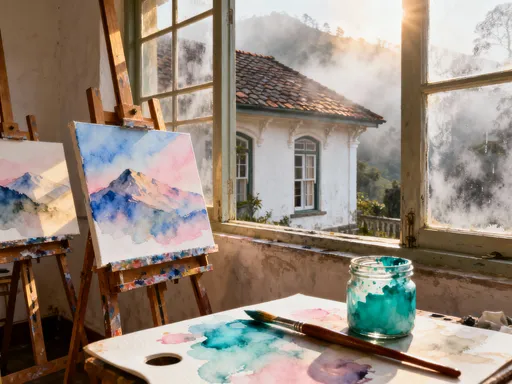
One of the most remarkable transformations has taken place in a former tea planter’s residence on the edge of town. Once abandoned and overgrown, the bungalow has been restored by a collective of five artists who now share it as a live-work space. The front parlor, once used for afternoon receptions, now houses a long wooden table where canvases are stretched and primed. The dining room has become a shared studio, its walls lined with drying paintings, palettes left mid-session, and brushes soaking in jars of linseed oil. Sunlight filters through lace curtains, casting delicate patterns across unfinished landscapes.
Visitors enter not through a formal gallery entrance, but by knocking on a side door and being welcomed by whichever artist is on 'host duty' that day. There are no rules, only quiet respect. Conversations unfold slowly, often beginning with observations about the weather or the quality of light. One might find a watercolorist at work, layering translucent washes to mimic the way fog lifts from the valley at sunrise. Another corner may hold a sculptor carefully chiseling a piece of reclaimed teak, salvaged from a dismantled estate shed. The air carries the earthy scent of wood shavings, the faint tang of oil paint, and the occasional whiff of cardamom tea brewing in the kitchen.
The intimacy of these spaces is their greatest strength. With no need to impress or sell, artists feel free to experiment, to fail, to begin again. A canvas might sit untouched for weeks, waiting for the right moment of clarity. Sketchbooks are filled with quick studies — a bird in flight, a worker bending over tea leaves, a cluster of rhododendrons — each a quiet tribute to the beauty of ordinary moments. The creak of floorboards, the soft clink of glass jars, the whisper of a brush moving across paper — these sounds form a kind of rhythm, a daily liturgy of creation.
Many of these studios operate on word-of-mouth alone. There are no websites, few social media accounts, and certainly no billboards. Discovery happens through chance — a conversation at a market stall, a recommendation from a homestay host, a serendipitous walk down a quiet lane. This invisibility is not accidental; it is a form of protection. By remaining under the radar, these spaces preserve their authenticity, shielding themselves from the pressures of commercialization and mass tourism. To visit one is to be granted access to something fragile and precious — a world where art is not a product, but a way of being.
Meet the Makers: Stories Behind the Brushes
Among the artists who call Nuwara Eliya home is a woman in her late forties who once worked as a schoolteacher in Kandy. After the loss of a close family member, she found herself drawn to painting as a form of healing. She began with simple watercolors — studies of flowers in her garden, the view from her window — but soon discovered a deeper connection to her ancestral roots. Her work now incorporates motifs from traditional Kandyan textiles, reimagined in soft blues and greys that echo the highland sky. She does not sell her paintings frequently, but when she does, she insists on meeting the buyer in person, ensuring that the piece will be valued, not merely displayed.
Another artist, a former architect from Colombo, left his corporate job after years of feeling disconnected from meaningful work. In Nuwara Eliya, he found a new medium: reclaimed wood. He sources timber from old tea factories, colonial outbuildings, and fallen trees, transforming them into sculptural wall pieces that blend geometric precision with organic form. His studio, located in a converted garage, is filled with sawdust and sketches, half-finished designs pinned to the walls. He speaks of his work as a dialogue between past and present — the wood carries the marks of its former life, and his carving reveals what was hidden beneath.
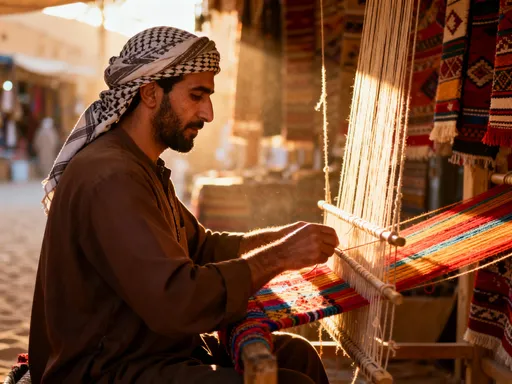
A third figure is a young woman who grew up in a tea-plucking family. She learned embroidery from her grandmother and began incorporating it into mixed-media works, stitching delicate patterns onto painted fabric. Her pieces often depict scenes from rural life — women carrying baskets of leaves, children playing near streams, elders sharing stories under banyan trees. She sees her art as a form of preservation, a way to honor a way of life that is slowly changing. She hosts small workshops for local girls, teaching them both the craft and the stories behind the symbols they stitch.
What unites these artists is not style or medium, but intention. Their work is not created for fame or fortune, but as an act of remembrance, resilience, and reverence. They are not rejecting modernity, but choosing to engage with it on their own terms — slowly, thoughtfully, and with deep respect for the past. In their hands, art becomes a bridge between generations, a quiet resistance to cultural erosion, and a testament to the enduring power of creative expression.
How to Discover These Spaces: A Traveler’s Guide
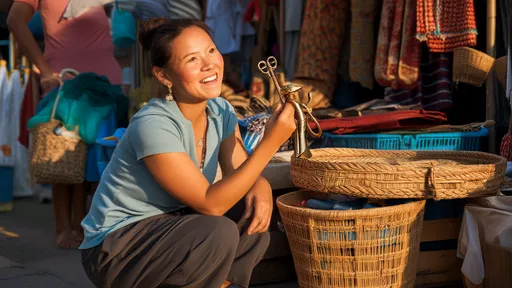
For those seeking to experience Nuwara Eliya’s hidden art worlds, the journey begins with curiosity and humility. These spaces are not listed in guidebooks or marked on maps. Instead, discovery relies on conversation and connection. Local cafés, especially those run by families or cooperatives, are excellent starting points. A simple question — 'Do you know any artists working in the area?' — can lead to introductions, handwritten notes, or even an impromptu invitation. Craft markets, particularly those held on weekends near Gregory Lake, often feature small stalls where local creators sell textiles, prints, or handmade cards. Engaging with these vendors can open doors to private studios.
The best times to visit are weekday mornings, when artists are most likely to be at work. Midday heat and afternoon rains often slow activity, but early light brings clarity and energy to the creative process. Visitors should approach with respect — asking permission before entering, avoiding loud conversations, and refraining from taking photographs without consent. These are not performance spaces, but places of focus and feeling. If an artist is willing to share their work, listening is more valuable than questioning.
Supporting these creators can be as simple as purchasing a small piece, making a donation, or leaving a thoughtful review on a community board. Buying directly ensures that artists receive full value for their labor, unlike sales through third-party galleries or souvenir shops. Even a sincere compliment or a shared story can leave a lasting impact. Travelers are encouraged to combine art visits with other low-impact experiences — a walk through a tea estate, a visit to a botanical garden, or a quiet picnic by a waterfall — to create a holistic, reflective journey.
Transportation options include walking, tuk-tuks, or hiring a local guide familiar with the cultural landscape. Some homestays offer curated itineraries that include studio visits, often arranged through personal relationships. These guided experiences tend to be more respectful and meaningful than standard tours, as they prioritize authenticity over spectacle. The key is to move slowly, to allow space for unexpected encounters, and to embrace the possibility of not finding anything at all — for sometimes, the search itself is part of the experience.
Why These Art Spaces Transform Travel Experiences
Visiting these hidden studios does more than add variety to a travel itinerary — it fundamentally changes the nature of tourism. Instead of collecting photos and souvenirs, travelers begin to collect moments of connection. They move from being observers to participants in a living culture. Psychological studies have shown that engaging with art, especially in intimate settings, can reduce stress, enhance empathy, and deepen memory retention. In the context of travel, this means that a brief conversation with an artist or the sight of a brush moving across canvas can leave a more lasting impression than any landmark.
These experiences also challenge common stereotypes about Sri Lanka. While tourism often focuses on beaches, temples, and wildlife, the art scene in Nuwara Eliya reveals a different dimension — one of quiet introspection, personal expression, and cultural continuity. It shows that tradition is not static, but constantly reinterpreted through individual vision. A painting of a tea plucker is not just a depiction of labor, but a meditation on dignity, endurance, and beauty in everyday life.
Moreover, these encounters foster emotional resonance. Unlike the fleeting satisfaction of a perfect Instagram shot, the memory of sitting in a sunlit studio, listening to an artist speak of loss and renewal, lingers long after the journey ends. It becomes part of the traveler’s own story. This kind of tourism does not extract; it exchanges. It asks not only what we can take from a place, but what we can bring — attention, respect, and a willingness to be changed.
In a world where destinations are increasingly homogenized by mass tourism, Nuwara Eliya’s art spaces offer a model of travel that is sustainable, meaningful, and deeply human. They remind us that the richest experiences are often the quietest — not the loudest, not the most advertised, but the ones that unfold in stillness, one conversation at a time.
Preserving the Magic: Sustainability and Cultural Respect
As awareness of these hidden art spaces grows, so does the responsibility to protect them. The very qualities that make them special — their intimacy, authenticity, and independence — are also their most vulnerable aspects. There is a real risk that increased attention could turn these sanctuaries into tourist attractions, complete with entry fees, crowds, and commercialization. Once that happens, the creative freedom that defines them may be lost. Therefore, mindful visitation is not just a suggestion — it is a necessity.
Travelers can help by practicing low-footprint engagement. This means visiting in small groups, if at all; respecting private spaces; and avoiding the urge to publicize exact locations online. Sharing stories is encouraged, but not at the expense of privacy. A general recommendation — 'I visited a beautiful artist’s studio in Nuwara Eliya' — is far more sustainable than tagging a precise address on social media. Word-of-mouth is powerful, but it should move slowly, like mist through the trees, not like a flood.
Supporting artists directly — through purchases, donations, or ethical promotion — ensures that the benefits of tourism stay within the community. Leaving positive reviews on local platforms, recommending artists to responsible tour operators, or simply writing a thank-you note can make a meaningful difference. The goal is not to turn these spaces into businesses, but to allow them to remain what they are: places of quiet creation, sustained by passion rather than profit.
Ultimately, the preservation of Nuwara Eliya’s art scene depends on a shared understanding: that some things are more valuable because they are not widely known. By choosing respect over exposure, presence over possession, travelers become stewards of a fragile magic — one that enriches not only the destination, but the journey itself.
Beyond the Postcard – A Deeper Nuwara Eliya
Nuwara Eliya, as it appears in brochures, is a place of perfect postcards — manicured gardens, steam trains, and endless rows of tea bushes. But the true essence of the town lies beyond the frame. It lives in the hush of a studio where a brush pauses mid-stroke, in the grain of wood shaped by hands that remember the past, in the thread of embroidery that carries a grandmother’s song. These hidden art spaces are not add-ons to the travel experience; they are its heart.
They remind us that every destination has layers, and that the deepest ones are often the quietest. To find them, we must slow down, listen closely, and approach with humility. We must be willing to step off the path, to knock on an unmarked door, to accept an invitation not because it promises spectacle, but because it offers truth. In doing so, we do not just see a place — we feel it.
The real beauty of Nuwara Eliya is not in its resemblance to England, nor in its fame for tea, but in the quiet hands that shape its culture every day. These artists, working in the mist and the mountain light, are the unseen keepers of a living heritage. Their work does not shout; it whispers. And if we are still enough, we might just hear it.
So let your journey be more than a checklist. Let it be a conversation. Let it begin not with a camera, but with a question. And as you leave, imagine one last image: a single painting, left to dry in a sunlit window, facing the hills, waiting not for applause, but for someone who will truly see it.